Vietnam (Vietnamese: Việt Nam) is a Southeast Asian country known for its rich history, vibrant culture, and stunning natural landscapes. It borders China to the north, Laos and Cambodia to the west, and the South China Sea to the east. Vietnam has become a popular destination for tourists seeking to explore its lush landscapes, historical sites, and bustling cities. Here’s an in-depth look at the country’s key aspects:
- Geography:
Vietnam is a long, narrow country that stretches over 1,000 kilometers (620 miles) from north to south. It is divided into three main regions:
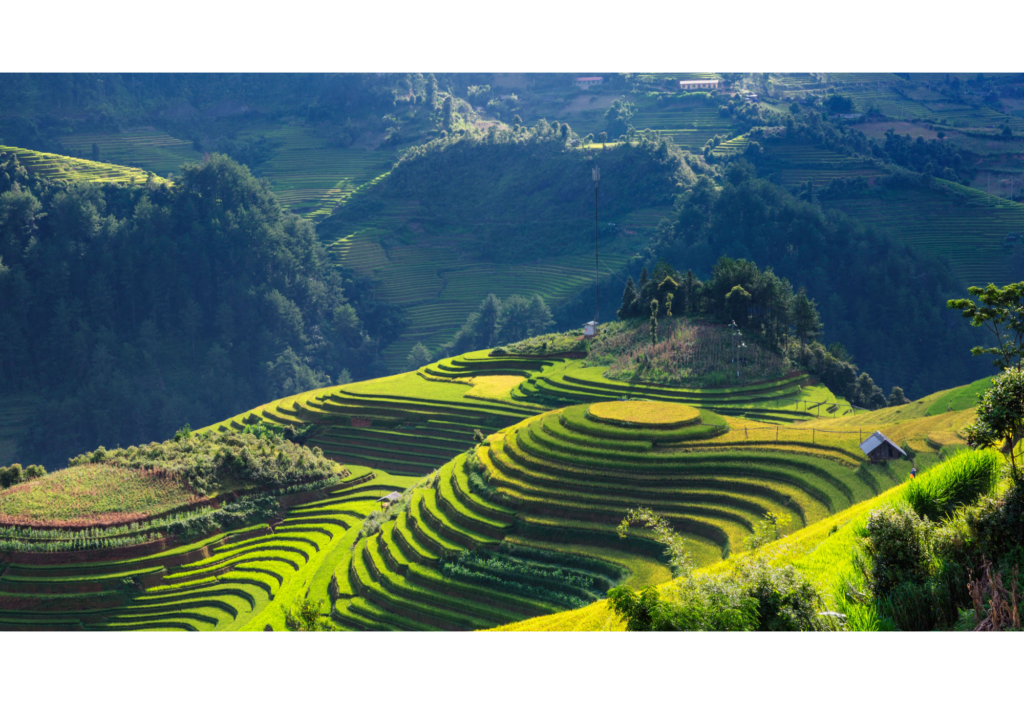
Northern Vietnam (Hanoi and surrounding areas) is characterized by mountainous terrain, including the Hà Giang highlands and the Sapa region, known for its terraced rice fields.
Central Vietnam (Hue, Da Nang, and Hoi An) features coastal plains, mountain ranges, and beautiful beaches.
Southern Vietnam (Ho Chi Minh City, Mekong Delta) is home to flatlands, rice paddies, and the vast Mekong River Delta.
The country’s coastline stretches for about 3,260 kilometers (2,000 miles), offering some of the most scenic beaches in Asia.
- History:
Vietnam’s history is marked by centuries of Chinese domination, French colonial rule, wars for independence, and division during the Cold War. Some key historical moments include:
Early History and Chinese Influence: Vietnam’s early history was shaped by Chinese influence, as China ruled the region for over 1,000 years, from 111 BCE to 938 CE. This period saw the introduction of Confucianism, Buddhism, and other aspects of Chinese culture.
Independence and Dynastic Rule: After gaining independence from China in the 10th century, Vietnam was ruled by several dynasties, including the Ly and Tran dynasties, which helped shape the country’s cultural and political landscape. The Nguyễn dynasty (1802–1945) was the last ruling family before French colonization.
French Colonialism (1858–1954): Vietnam was colonized by France in the mid-19th century. The country became part of French Indochina, along with Cambodia and Laos. This period saw the exploitation of Vietnam’s resources and the establishment of European-style governance. However, it also led to resistance movements, most notably by figures like Ho Chi Minh.
The First Indochina War (1946–1954): Following World War II, the Vietnamese, led by the Viet Minh under Ho Chi Minh, fought for independence from French rule. The war ended with the Geneva Accords in 1954, which divided Vietnam into two parts: the communist North, led by Ho Chi Minh, and the anti-communist South, supported by the United States.
The Vietnam War (1955–1975): This was a Cold War-era conflict between communist North Vietnam, supported by the Soviet Union and China, and South Vietnam, backed by the United States. The war led to significant loss of life and widespread devastation. In 1975, North Vietnam succeeded in reunifying the country under a communist government, leading to the creation of the Socialist Republic of Vietnam.
Post-War Era and Economic Reforms: After the war, Vietnam faced economic challenges, but in the late 1980s, the government introduced a series of market reforms under the Đổi Mới policy, moving toward a socialist-oriented market economy.
- Culture:
Vietnamese culture is a blend of native traditions and influences from China, France, and other countries. Some key aspects of Vietnamese culture include:
Language: Vietnamese, or Tiếng Việt, is the official language and is written in the Latin alphabet. It has six tones, making it a tonal language. While there are some regional dialects, the Hanoi dialect is considered the standard.
Cuisine: Vietnamese food is known for its fresh ingredients, bold flavors, and balance of herbs and spices. Some popular dishes include:
Pho: A fragrant noodle soup made with beef or chicken, herbs, and a flavorful broth.
Bánh Mì: A Vietnamese-style baguette sandwich with meats, pickled vegetables, and fresh herbs.
Goi Cuon: Fresh spring rolls filled with shrimp, herbs, and rice noodles, often served with a peanut dipping sauce.
Bánh Xèo: Savory pancakes filled with shrimp, pork, and bean sprouts.
Festivals: The most important holiday in Vietnam is Tết Nguyên Đán (Lunar New Year), a celebration marking the beginning of the lunar calendar year. It is a time for family reunions, feasts, and honoring ancestors. Other significant festivals include the Mid-Autumn Festival and Hùng Kings Festival.
Traditional Clothing: The traditional Vietnamese dress is the Ao Dai, a long tunic worn over pants, which symbolizes grace and elegance.
Religions: Vietnam has a diverse religious landscape. The majority of the population practices Buddhism, followed by Confucianism and Taoism. There are also significant numbers of Christians (both Catholic and Protestant) and adherents of indigenous religions. Many Vietnamese also practice ancestor worship, which is an important cultural tradition.
- Economy:
Vietnam has one of the fastest-growing economies in Southeast Asia. After the economic reforms of Đổi Mới in the late 1980s, the country moved toward a market economy while maintaining its communist political structure. Key sectors of the economy include:
Agriculture: Rice, coffee, and rubber are major exports. The Mekong Delta is known as Vietnam’s “rice bowl,” producing much of the country’s rice.
Manufacturing and Exports: Vietnam is an important hub for textiles, electronics, and machinery manufacturing. The country has become a major global supplier of electronics, particularly mobile phones and computers.
Tourism: Vietnam is a popular tourist destination due to its scenic beauty, historical landmarks, and vibrant cities. Attractions include:
Halong Bay: A UNESCO World Heritage site known for its dramatic limestone karsts and islands.
Hue: The ancient capital with its historic citadel and royal tombs.
Hoi An: A well-preserved ancient town famous for its traditional architecture.
Ho Chi Minh City (Saigon): The bustling southern metropolis with a mix of colonial architecture and modern skyscrapers.
Sapa: A region known for its terraced rice fields and indigenous hill tribes.
Development Challenges: Despite rapid economic growth, Vietnam faces challenges related to environmental degradation, income inequality, and political freedoms.
- Government and Politics:
Vietnam is a one-party socialist republic with the Communist Party of Vietnam as the ruling party. The government has been led by the President, Prime Minister, and National Assembly. The country has made significant economic strides but remains under an authoritarian regime, with limited political freedoms and restrictions on free speech and assembly. - Key Cities:
Hanoi: The capital of Vietnam, located in the north. It is known for its centuries-old architecture, vibrant street life, and historical sites.
Ho Chi Minh City (Saigon): The largest city and the economic hub of the country. It has a dynamic, fast-paced atmosphere, with a mix of modern skyscrapers and colonial-era buildings.
Da Nang: A coastal city in central Vietnam, known for its beautiful beaches and proximity to cultural heritage sites like Hoi An and My Son.
Hue: The former imperial capital, famous for its ancient citadel and royal tombs. - Natural Beauty:
Vietnam is famous for its stunning natural landscapes, including mountains, beaches, and islands. Some of the most notable natural attractions include:
Halong Bay: Known for its emerald waters and thousands of limestone islands.
Phong Nha-Kẻ Bàng National Park: A UNESCO World Heritage site known for its caves, including the world’s largest cave, Son Doong.
Sapa: A mountainous region known for its terraced rice fields and indigenous cultures.
Mekong River Delta: A vast network of waterways, mangroves, and floating markets in the southern part of the country.
Conclusion:
Vietnam is a country that offers a unique blend of ancient traditions and modern growth. With its rich cultural heritage, diverse landscapes, and resilient people, Vietnam has become a major player in Southeast Asia. Whether you’re interested in history, nature, or food, Vietnam has something to offer for every traveler and continues to grow as a regional economic and cultural power.