
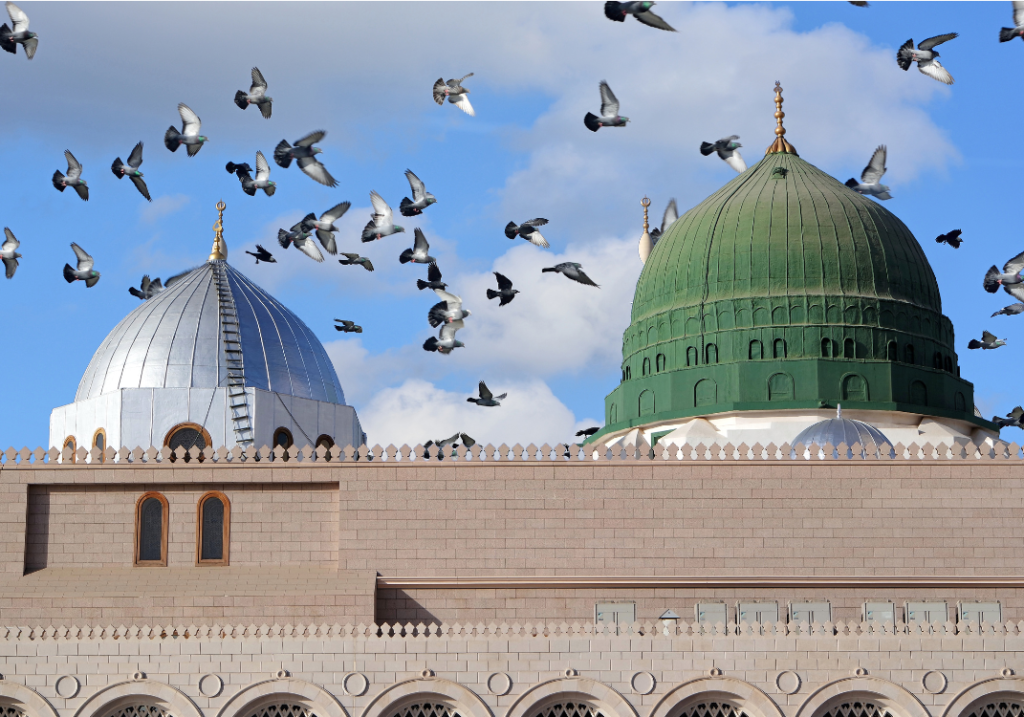
Madina (or Medina), officially known as Al-Madina Al-Munawwara (المدينة المنورة), is one of the two holiest cities in Islam, alongside Mecca. Located in present-day Saudi Arabia, Madina holds immense religious, historical, and cultural significance for Muslims around the world. It was the city where the Prophet Muhammad (PBUH) and his followers migrated after facing persecution in Mecca, marking the beginning of the Islamic calendar. Madina also became the administrative, spiritual, and political center of early Islam.
Here’s a detailed overview of Madina and its importance in Islam:
- Historical Significance:
The Migration (Hijrah):
Madina is most famous for being the destination of the Hijrah (migration) of the Prophet Muhammad and his followers from Mecca in 622 CE, marking the start of the Islamic calendar (1 AH – Anno Hegirae). This migration was a pivotal event in Islamic history, as it allowed the Prophet Muhammad to establish a Muslim community free from the persecution they faced in Mecca.
The Birth of the Islamic State:
After the Hijrah, Madina became the political and spiritual center of Islam. Prophet Muhammad (PBUH) established the first Islamic state here, where he not only acted as a religious leader but also as a political and military leader. The Constitution of Medina, a document that established a multi-religious Islamic state, was drafted here, outlining the rights and responsibilities of Muslims, Jews, and other communities living together.
The Battle of Uhud:
Madina was the site of the Battle of Uhud in 625 CE, one of the significant early battles between the Muslims of Madina and the Quraysh of Mecca. Though the battle ended in a setback for the Muslims, it taught important lessons in strategy, unity, and faith.
The Battle of the Trench (Khandaq):
Another important event that took place near Madina was the Battle of the Trench in 627 CE, where the Muslims, led by the Prophet Muhammad (PBUH), successfully defended the city from a siege by the Quraysh and their allies.
The Treaty of Hudaybiyyah:
In 628 CE, the Treaty of Hudaybiyyah was signed between the Muslims and the Quraysh, allowing for peaceful relations between the two parties and opening the way for the spread of Islam in the Arabian Peninsula. This treaty was signed in a place near Madina and was a precursor to the eventual peaceful conquest of Mecca.
- Religious Importance:
Al-Masjid an-Nabawi (The Prophet’s Mosque):
The Prophet’s Mosque in Madina is the second holiest mosque in Islam, after the Masjid al-Haram in Mecca. It was originally built by the Prophet Muhammad (PBUH) himself upon his arrival in Madina. The mosque has been expanded and renovated over the centuries and now stands as a grand architectural wonder.
The Prophet’s Tomb:
Within the mosque lies the Tomb of the Prophet Muhammad (PBUH), one of the holiest sites in Islam. The Prophet’s tomb is located beside the minbar (pulpit), and millions of Muslims visit it every year to offer their respects and prayers.
The Green Dome:
Above the tomb of the Prophet is a green dome, which is one of the most iconic landmarks of the Prophet’s Mosque. It is a symbol of the reverence and honor that Muslims hold for the Prophet Muhammad (PBUH).
The Masjid Quba:
The Quba Mosque is the first mosque built by the Prophet Muhammad (PBUH) in Madina, just after his arrival from Mecca. It is a place of great spiritual significance, as the Prophet is reported to have said that praying in this mosque is like performing one Umrah. Many Muslims visit it during their pilgrimage to Madina.
The Masjid al-Qiblatain:
The Mosque of the Two Qiblahs is a significant site in Madina because it is where the direction of prayer (Qiblah) was changed from Jerusalem to Mecca. Initially, Muslims prayed toward Jerusalem, but after this event, the Qiblah was changed to the Kaaba in Mecca, as commanded by Allah.
Baqi’ Cemetery:
The Jannat al-Baqi is a famous cemetery located near the Prophet’s Mosque. It is the burial place of many of the Prophet’s family members, companions (Sahabah), and prominent early Muslims. Notable figures buried here include the Prophet’s wives, including Ummul Mu’minin Aisha, and his daughter Fatimah.
- Modern-Day Madina:
Religious Tourism and Pilgrimage:
Madina is a major destination for Muslim pilgrims, particularly those performing Umrah or Hajj. While Hajj rituals primarily take place in Mecca, pilgrims often visit Madina before or after their pilgrimage to offer prayers at the Prophet’s Mosque and visit the other sacred sites. The city experiences millions of visitors each year, making it a center of religious activity and reflection.
Economic and Cultural Hub:
Madina has grown into a modern city with a significant population. It is a cultural and educational center for Muslims, hosting many religious institutions and universities, such as the Islamic University of Madinah. The city has become a thriving urban center with a blend of traditional Islamic values and modern developments.
Preserving Islamic Heritage:
While Madina has undergone modernization, efforts have been made to preserve its Islamic heritage. Several historical sites, mosques, and Islamic landmarks are carefully maintained to ensure that visitors can connect with the city’s rich religious history.
- The Role of Madina in Islam:
A City of Peace and Sanctuary:
Madina is often referred to as “The City of Light” (Al-Madina Al-Munawwara), symbolizing the illumination brought to the world by the arrival of the Prophet Muhammad (PBUH) and the spread of Islam. It is a city that embodies peace, unity, and devotion.
The Role of the Prophet Muhammad (PBUH):
Madina served as the base from which the Prophet Muhammad (PBUH) spread the message of Islam. It was here that he consolidated his leadership, established the Muslim community (Ummah), and set the foundation for the practices and governance that would guide the Muslim world.
The Spiritual Significance of Madina:
Madina is a city of high spiritual significance for Muslims, as it was the place where many of the events in the life of the Prophet Muhammad (PBUH) took place, including his migration, the establishment of the first mosque, the writing of the Constitution of Medina, and many pivotal battles. Muslims hold Madina in deep reverence and visit it to deepen their faith, offer prayers, and reflect on the lessons of the Prophet’s life.
- Key Landmarks in Madina:
The Quba Mosque: The first mosque built by the Prophet Muhammad (PBUH) upon his arrival in Madina.
The Prophet’s Mosque: One of the holiest mosques, containing the tomb of Prophet Muhammad (PBUH).
The Masjid al-Qiblatain: The mosque where the Qiblah was changed from Jerusalem to Mecca.
Baqi’ Cemetery: The burial ground of the Prophet’s family and companions.
Uhud Mountain: The site of the Battle of Uhud, where many companions of the Prophet were martyred. - Conclusion:
Madina holds an esteemed place in the hearts of Muslims. It is the city where the Prophet Muhammad (PBUH) established the foundations of the Muslim community and spread the teachings of Islam. The Prophet’s Mosque, the Quba Mosque, and the Baqi’ Cemetery are among the most revered sites in Islam. Madina’s role as a place of refuge, spiritual awakening, and community building makes it an essential part of the Islamic tradition. Its significance continues to inspire millions of Muslims who visit to pray, reflect, and deepen their faith.