
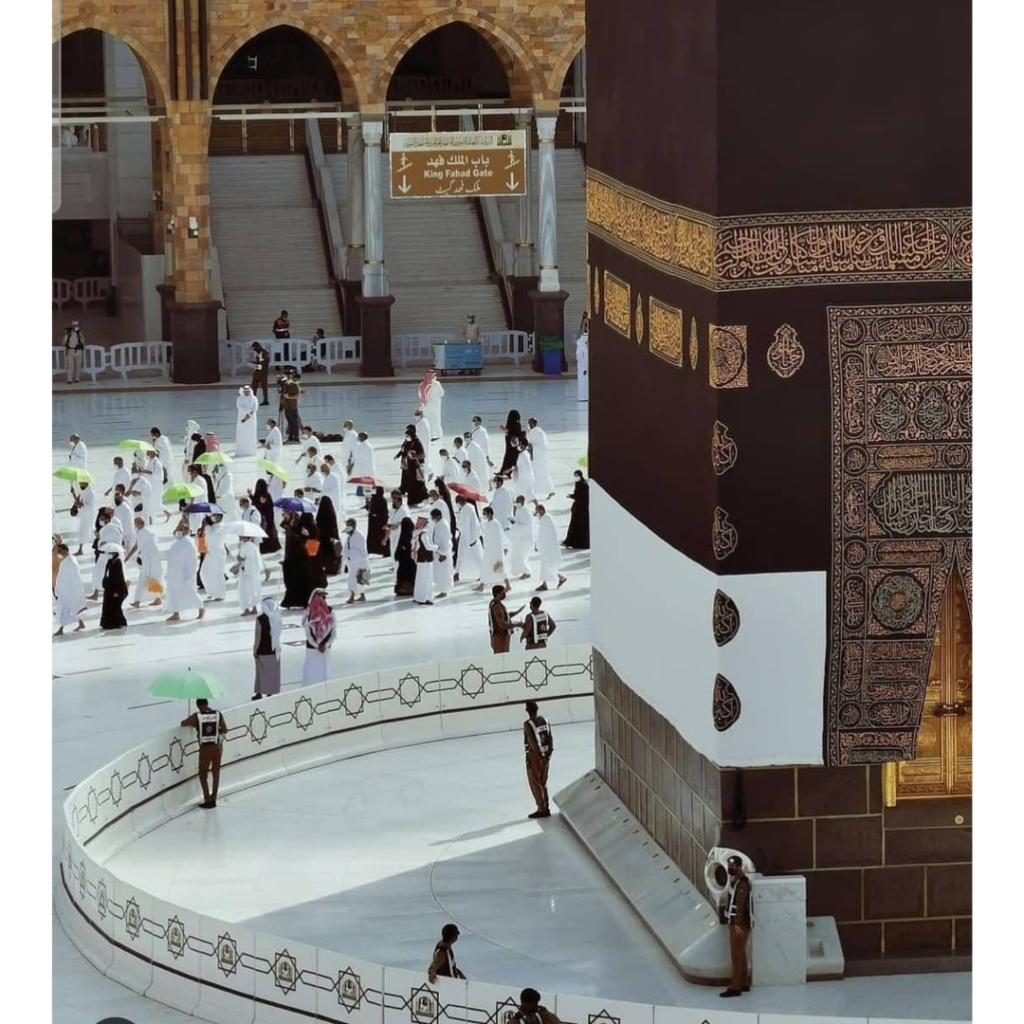
Mecca (Makkah) is a city that holds immense spiritual, historical, and cultural significance for Muslims around the world. Its importance is deeply rooted in Islamic tradition and history, and it continues to be a central place of pilgrimage, worship, and learning for Muslims. Here’s a deeper dive into the history, significance, and modern-day aspects of Mecca:
- Religious Significance:
The Kaaba and Masjid al-Haram:
The Kaaba, located in the heart of the Masjid al-Haram (the Grand Mosque), is the most sacred site in Islam. It is believed to have been originally built by the Prophet Ibrahim (Abraham) and his son Isma’il, and later reconstructed by the Prophet Muhammad. Muslims around the world face the Kaaba during their five daily prayers, a practice known as the qibla.
Every year, millions of Muslims from around the world travel to Mecca to perform Hajj—a pilgrimage that is obligatory for Muslims who are able to do so at least once in their lifetime. During Hajj, pilgrims perform a series of rituals including the Tawaf (the act of circling the Kaaba seven times), and other rites such as the Sa’i (walking between the hills of Safa and Marwah), which commemorate actions of the Prophet Ibrahim and his family.
The Black Stone:
Embedded in the corner of the Kaaba is the Black Stone (al-Hajar al-Aswad), which is believed to be a relic from heaven. Pilgrims often try to kiss the stone or touch it during the Tawaf, though this is not obligatory.
Masjid al-Haram:
Masjid al-Haram, which is the largest mosque in the world, surrounds the Kaaba and is the focal point of worship in Mecca. The mosque has undergone numerous expansions to accommodate the growing number of worshipers and pilgrims each year. It can now hold more than a million people during peak times, especially during Hajj.
- Historical Significance:
Birthplace of Prophet Muhammad:
Mecca is the birthplace of the Prophet Muhammad, who was born in 570 CE in the Quraysh tribe. Muhammad’s life and his role as the messenger of Islam are deeply tied to the city. The house where he was born no longer exists, but the location is believed to be near the Masjid al-Haram.
The Early Days of Islam:
Mecca was also the place where the Prophet Muhammad received the first revelations from Allah (God) through the angel Jibril (Gabriel) at the age of 40. His early years of preaching in Mecca were met with resistance and persecution from the Quraysh, the ruling tribe of the city. Eventually, Muhammad and his followers emigrated to Medina (then called Yathrib) in an event known as the Hijra in 622 CE, marking the beginning of the Islamic calendar.
Conquest of Mecca:
In 630 CE, after years of conflict, Muhammad and his followers successfully conquered Mecca, and the city became the center of the Islamic faith. One of his first acts after taking the city was to cleanse the Kaaba of its idols and dedicate it to the worship of Allah alone.
- Hajj and Umrah:
Hajj:
Hajj is the pilgrimage to Mecca that every Muslim is required to undertake at least once in their lifetime, provided they meet certain conditions (such as financial and physical ability). It is performed during a specific period each year, from the 8th to the 12th of Dhu al-Hijjah, the 12th month of the Islamic lunar calendar. The pilgrimage includes a series of rites performed over several days, such as standing at Arafat (a key moment in the pilgrimage), throwing pebbles at pillars in Mina, and sacrificing an animal (often a sheep or goat) in remembrance of Ibrahim’s willingness to sacrifice his son for God.
Umrah:
Umrah is a lesser pilgrimage that can be performed at any time of the year, although it is not obligatory like Hajj. It includes some of the same rituals as Hajj, such as Tawaf and Sa’i, but it is shorter and does not include the standing at Arafat or the other specific rituals of Hajj.
- Modern Mecca:
Expansion and Infrastructure:
In recent decades, the city has undergone massive expansion projects to accommodate the increasing number of pilgrims. The Masjid al-Haram has been expanded several times to allow for more worshipers, and the surrounding area has seen the construction of hotels, transportation systems (like the Mecca Metro), and other infrastructure developments.
The Development of Mina and Arafat:
To accommodate pilgrims during Hajj, the cities of Mina and Arafat have also seen significant development. Mina is where pilgrims spend the night in tents and perform the ritual of stone-throwing, while Arafat is the site of the most important ritual of Hajj: standing in prayer at the plain of Arafat, a moment often described as the “holiest day in Islam.”
- Cultural and Economic Impact:
A Spiritual Hub:
Mecca remains a spiritual hub not just for religious practices but also for Islamic scholarship. Many Muslims visit the city for religious study, and institutions of higher learning related to Islamic sciences, such as the Umm al-Qura University, are based there.
Economic Significance:
The pilgrimage industry plays a significant role in the economy of Mecca and Saudi Arabia. Millions of pilgrims from around the world contribute to the local economy through spending on accommodations, transportation, food, and religious items. The Saudi government has invested heavily in improving the infrastructure to support the pilgrims.
Security and Health Concerns:
Due to the large number of people who visit Mecca each year, maintaining safety and public health during the Hajj pilgrimage is a major concern. Saudi authorities implement strict measures to control crowds, prevent stampedes, and manage health risks such as the spread of infectious diseases. In recent years, the COVID-19 pandemic also prompted the government to impose restrictions on the number of pilgrims to ensure public safety.
- Controversies and Challenges:
The Role of Women:
While Mecca has traditionally been a male-dominated space in terms of religious leadership, the role of women in Islamic worship and pilgrimage is evolving. Women have been able to participate fully in Hajj and Umrah for many years, but there have been debates regarding the accessibility of certain spaces in the Masjid al-Haram, particularly around the Kaaba.
Modernization and Preservation:
As Mecca modernizes, some critics express concerns over the preservation of its historical and cultural heritage. For example, many old buildings in the city, including the birthplace of Prophet Muhammad, have been demolished to make way for new construction. There are ongoing debates about how to balance modernization with the preservation of Islamic heritage.